
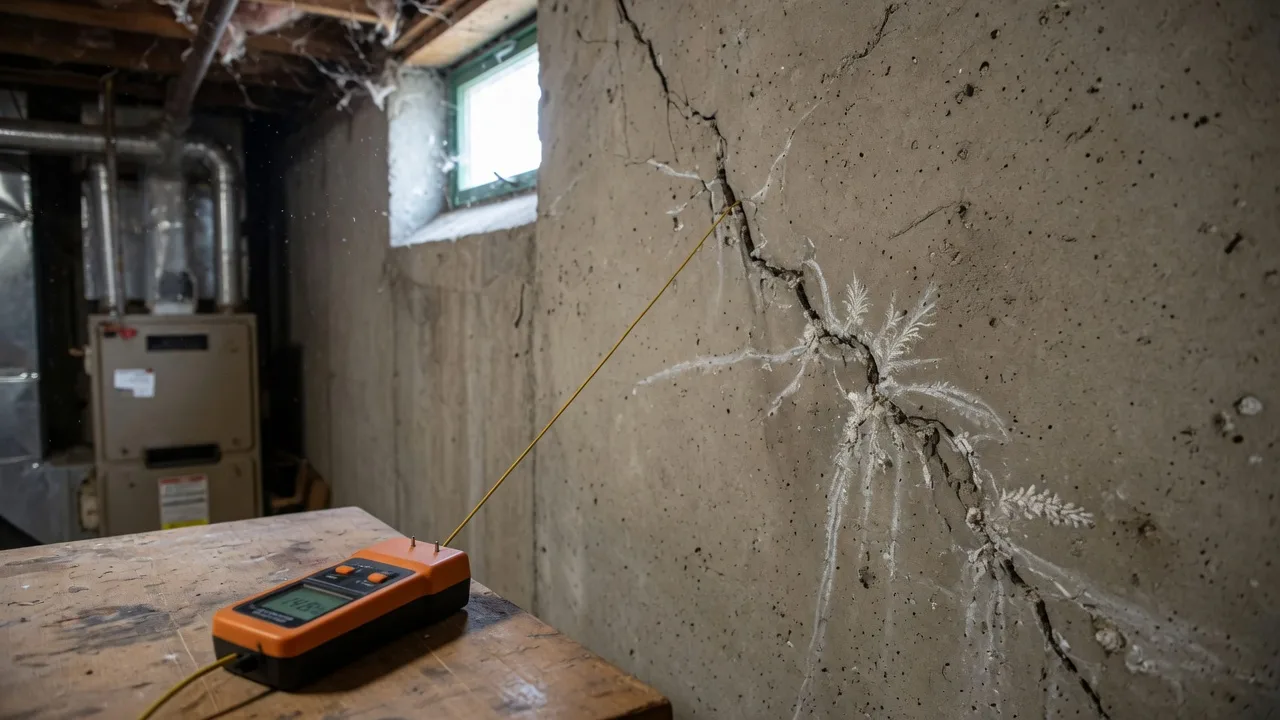
A home inspection report can read like a disaster movie, but most of what it lists is routine. The real red flags in Northeast Ohio homes are a much shorter list: basement water, foundation movement, radon, and major systems near the end of their lives. Here is what should actually worry you on a home in Trumbull or Mahoning County, which findings are just noise, and how to respond to each one with your protection intact.
Executive summary: separate the red flags from the noise
Inspection reports flag dozens of items on an older home. The findings that deserve your attention are a small, specific set: water coming into the basement, structural movement in the foundation, radon above the EPA action level, and roofs, furnaces, and electrical systems near the end of their usable life. Almost everything else, worn flooring, dated kitchens, hairline settling cracks, is routine or cosmetic.
The good news is that most serious findings are negotiable. Almost none are automatic deal-breakers if the price reflects them. The skill is knowing which category each finding falls into before you sign anything, and that is exactly what this guide walks through.
The two-part rule for reading any report
Part one: a red flag is anything that costs real money soon, threatens the structure, or affects safety. Part two: everything else is maintenance or preference. When you sort findings by those two rules, a scary report becomes a short list of numbers.
The table below is the quick reference for the findings that show up again and again on inspections across Warren, Howland, Niles, Boardman, and Canfield, driven by the region's clay-heavy soil, freeze-thaw winters, and older housing stock. Severity labels are honest averages, not guarantees; a licensed inspector on your specific home overrides any table.
Red flag vs. routine: the Northeast Ohio cheat sheet
This is the comparison table buyers ask for most. Use it to sort your own report, then bring the serious lines to the negotiation table. Typical inspection cost in Ohio runs about $325 to $500 for a standard single-family home, and it is the cheapest insurance you will buy in this process.
Finding
Severity
What to do about it
Standing water, damp walls, or heavy efflorescence in the basement
Serious
The number one finding in Ohio homes. Get a waterproofing contractor's quote and a rain-event look before you decide.
Horizontal cracks, bowing or leaning foundation walls, widening diagonal cracks
Serious
Signs of real structural movement. Pay for a structural engineer's assessment before negotiating or walking.
Radon test at or above 4.0 pCi/L, the EPA action level
Serious
Ohio is a high-radon state and roughly half its homes test above the level. Mitigation runs about $1,200 to $2,000; negotiate who pays.
Missing, curling, or brittle shingles, soft spots, or worn flashing
Serious
A roof near the end of its life is a replacement cost, not a patch job. Get a roofer's quote and a seller credit or price adjustment.
Furnace or boiler near or past 15 to 20 years old, or run hard and dirty
Serious
Factor a near-term replacement into your budget and your offer, or ask for a credit toward it.
Knob-and-tube wiring, fuse panels, ungrounded outlets
Serious
Outdated electrical can complicate insurance and financing. Have an electrician quote the fix before you commit.
Old galvanized plumbing
Sometimes
Can matter a lot or not at all. A plumber's flow and condition check tells you which, usually for a small fee.
Hairline vertical settling cracks in the foundation
Routine
Normal in clay soils and freeze-thaw cycles. Note them, monitor them, and move on.
Old windows, dated kitchen, worn flooring, cosmetic wear
Routine
Not defects, just preferences. Price your offer for the update you would make, not a renegotiation.
Basement water is finding number one for a reason
Ohio inspectors flag water intrusion more than anything else, and Northeast Ohio's older homes are built for it: full basements poured before modern waterproofing, sitting in clay soil that expands when wet, with gutters and downspouts that often dump water right at the foundation. The result is dampness, efflorescence, mold, and that musty smell you pick up on the stairs.
Here is the framing that keeps it from being scary: water intrusion is one of the most fixable problems on the list. Regrading, extended downspouts, a proper sump pump, and interior or exterior waterproofing each have a known cost, and the work is routine for local contractors. What you want from the seller is a credit that covers the real quote, not a promise that it will be fine in spring.
Foundation cracks: learn which shape to fear
Not all cracks are equal. Fine vertical cracks from settling are common in this region's clay soil and generally nothing to lose sleep over. The shapes that matter are horizontal cracks, bowing or leaning walls, and diagonal cracks that keep widening, because those point to earth pressure pushing the wall, which is structural, expensive, and worth an expert opinion.
When the inspector flags any of those, spend the few hundred dollars on a structural engineer before you negotiate anything. Their report converts a vague fear into a specific number: repair estimate, urgency, and whether the home is sound. With that number in hand, you either negotiate a meaningful credit or walk with a clear conscience, and your inspection contingency protects both paths.
Radon: test every basement, negotiate the fix
Ohio sits in EPA radon zones 1 and 2, Trumbull and Mahoning Counties are classified Zone 2 with moderate potential, and the statewide median indoor level runs around 5.4 pCi/L, above the EPA's 4.0 action level. Roughly half of Ohio homes test above that level, which is why inspectors recommend the 48-hour test on every home, especially any with a basement.
The disclosure side matters too: under Ohio Revised Code Section 5302.30, sellers must give you the Residential Property Disclosure Form before you sign a contract, and it asks directly about radon. A "No" or "Unknown" answer is not a clean bill of health, it usually just means no one ever tested. If your own test comes back high, know that mitigation systems in Northeast Ohio typically run about $1,200 to $2,000, are proven and mechanical, and are a fair negotiation item.
Roofs and HVAC: the big-ticket expiration dates
Northeast Ohio weather is hard on roofs: snow loads, ice, and freeze-thaw cycles wear shingles and flashing faster than warmer climates do. An inspector who finds missing, curling, or brittle shingles, soft spots, or ceiling stains is telling you the roof has a clock on it, and a full replacement is a significant line item. Get the roofer's quote and let it price the negotiation.
Heating and cooling run on the same logic. A furnace or boiler near or past 15 to 20 years old can keep working for years, but its replacement cost belongs in your decision now. None of this has to kill a deal; it has to be priced in. A seller who accepts a fair credit for a roof or furnace that still works is not losing, they are closing.
Your step-by-step: from report to decision
Step one, read with the two-part rule: mark every line as serious or routine. Step two, get quotes on the serious lines from the right specialist, a waterproofing contractor, structural engineer, roofer, electrician, or plumber. Step three, total the realistic costs and bring that number, plus the seller's disclosure form, to the negotiation. Step four, negotiate as a package: a credit, a repair, or a price adjustment. Step five, keep your inspection contingency deadlines on a calendar, because in Ohio those windows are short and they are your protection if the numbers do not work.
The strongest position you can be in is one where every scary line already has a dollar figure attached. That is the report buyers need, and it is exactly how we approach inspections for every client I represent.
Red-flag checklist
Your checklist: respond to the report with your protection intact
-
Ask for the Residential Property Disclosure Form before you sign; Ohio law requires the seller to provide it.
-
Budget $325 to $500 for the inspection of a standard single-family home, plus follow-up specialist quotes on anything serious.
-
Run a 48-hour radon test on any home with a basement, even if the seller answered no or unknown.
-
Get written quotes for water, foundation, roof, HVAC, and electrical findings before you negotiate.
-
Separate serious from routine, and keep your repair requests to the lines with real cost or risk.
-
Negotiate a credit or price adjustment that matches the quotes, not a vague promise to fix it later.
-
Track your inspection contingency deadline and walk if the numbers genuinely do not work.
Sources & further reading
- The Most Common Home Inspection Issues Found in Ohio Homes (HC Inspectors)
- The Top 10 Common Home Inspection Findings in Ohio Homes (Lemonade Home Inspections)
- Radon in Northeast Ohio: testing, mitigation costs, and how negotiations usually go (NEO Home Pros)
- EPA Map of Radon Zones
- Ohio Revised Code Section 5302.30: Residential property disclosure form
- Ohio Department of Health: Radon home information
- Home Inspection Costs in Ohio for 2026 (Home Inspections in Ohio)
- How Much Does a Home Inspection Cost in Ohio? (iBuyer)
- Trumbull County Home Inspections (Pinnacle Inspection Services)
Loan programs, rates, and program details change. Verify current terms with a lender before relying on anything here.
Thinking of buying or selling? Let's connect for a personalized strategy session and I will help you read every line of your report with clear eyes and a clear plan. Book a free consultation and let's talk. Here to help, Melanie.